
Building Confidence Through Play and Movement
Confidence in sport often grows through repeated positive experiences, achievable challenges and opportunities for children to recognise their own progress.
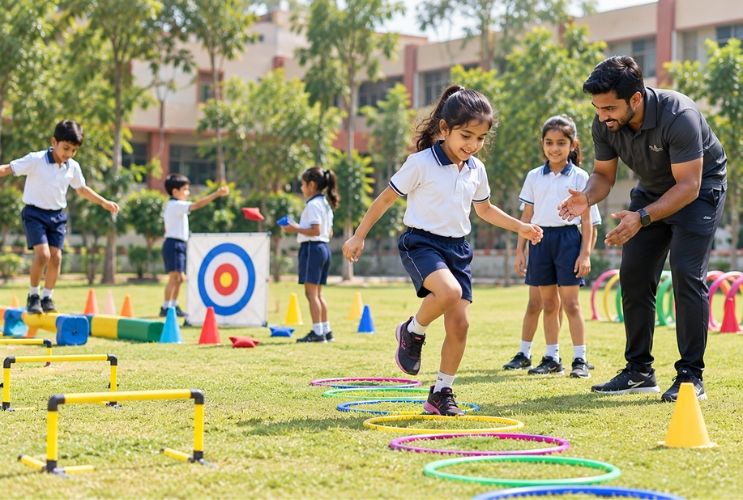
Confidence does not always appear after one big achievement. For many children, it develops gradually through small successes, encouragement and repeated opportunities to participate.
Play and movement give children a practical space to try, adapt, communicate and recognise that they are becoming more capable over time.
Achievable Challenge
Children can build confidence when activities challenge them without making participation feel overwhelming.
When a child can see that practice is helping them balance better, move more smoothly or complete something they previously found difficult, progress becomes visible.
Encouragement Matters
Constructive feedback can help children notice improvement instead of focusing only on mistakes or comparison with others.
Clear encouragement also helps create an environment where children feel more comfortable trying again when something does not work the first time.
Team Experiences
Group activities give children opportunities to practise communication, cooperation and shared responsibility.
They also learn that participation is not only about individual performance. Supporting teammates, listening and contributing to a group can create different forms of confidence.
Positive Participation
Children are more likely to stay involved when movement feels welcoming, age-appropriate and enjoyable.
Consistent positive experiences can help children become more willing to participate, explore new activities and remain physically active as they grow.
